-
MOSAIC : THE CONSORTIUM
-
MOSAIC : THE INSTRUMENT
-
MOSAIC : THE SCIENCE
|
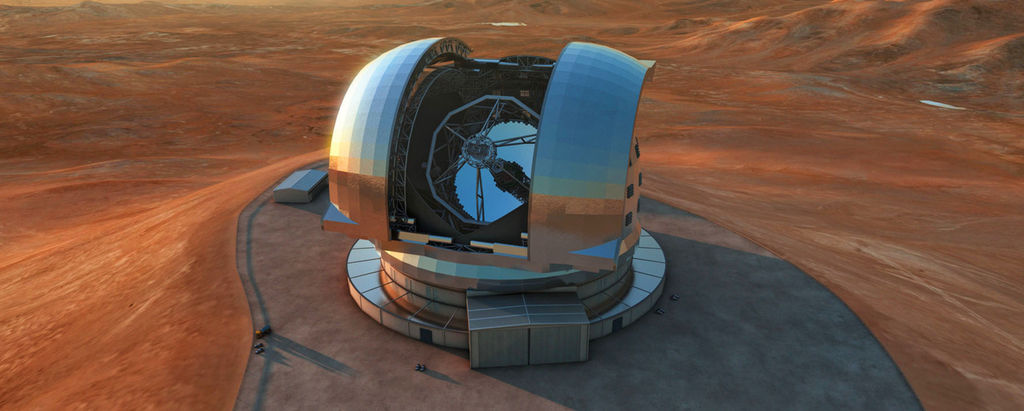
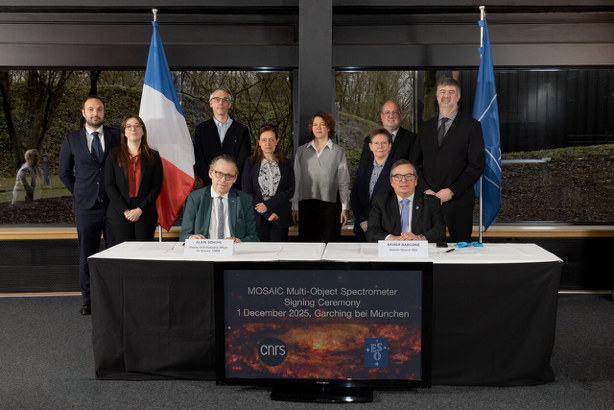
MOSAIC has signed the agreement with ESO for the design and construction of the instrument for ESO’s Extremely Large Telescope (ELT) the 1rst of December. The agreement was signed by ESO’s Director General Xavier Barcons and Alain Schuhl, the Deputy CEO for Science at the French National Centre for Scientific Research (CNRS), the institution leading the MOSAIC consortium. The signing took place at the ESO Headquarters in Garching, Germany. More information can be found in the ESO Press Release. The MOSAIC Consortium also held its Quarterly Progress Meeting #8 at ESO Headquarters the 02-03/12/2025. | ||
|
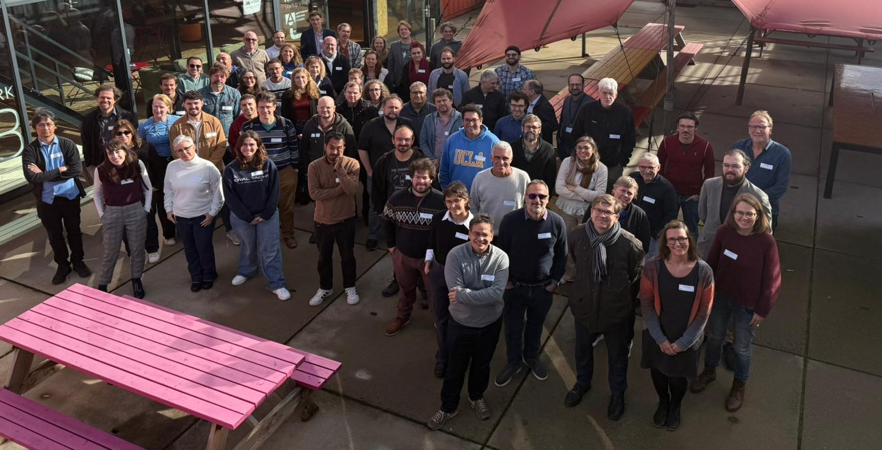
The MOSAIC Consortium held its Science Meeting from October 27 to 29, 2025, at the Venture Studio, located in the Amsterdam Science Park. More than 60 people attended the meeting in person (see Figure), and over 20 participated online. This meeting aimed to foster interactions within the Science Team and to initiate the preparation of the MOSAIC Red Book, which is expected to be finalized by mid-2027 at the latest. The main objectives were achieved, namely: (i) to inform the team about the project status, science plans, and latest developments in the instrument design; (ii) to encourage interactions and synergies between MOSAIC and other major projects in spectrocopy; and (iii) to discuss new technical and scientific developments that may impact the operation of MOSAIC, in particular for the exploitation of the GTO. | ||
|
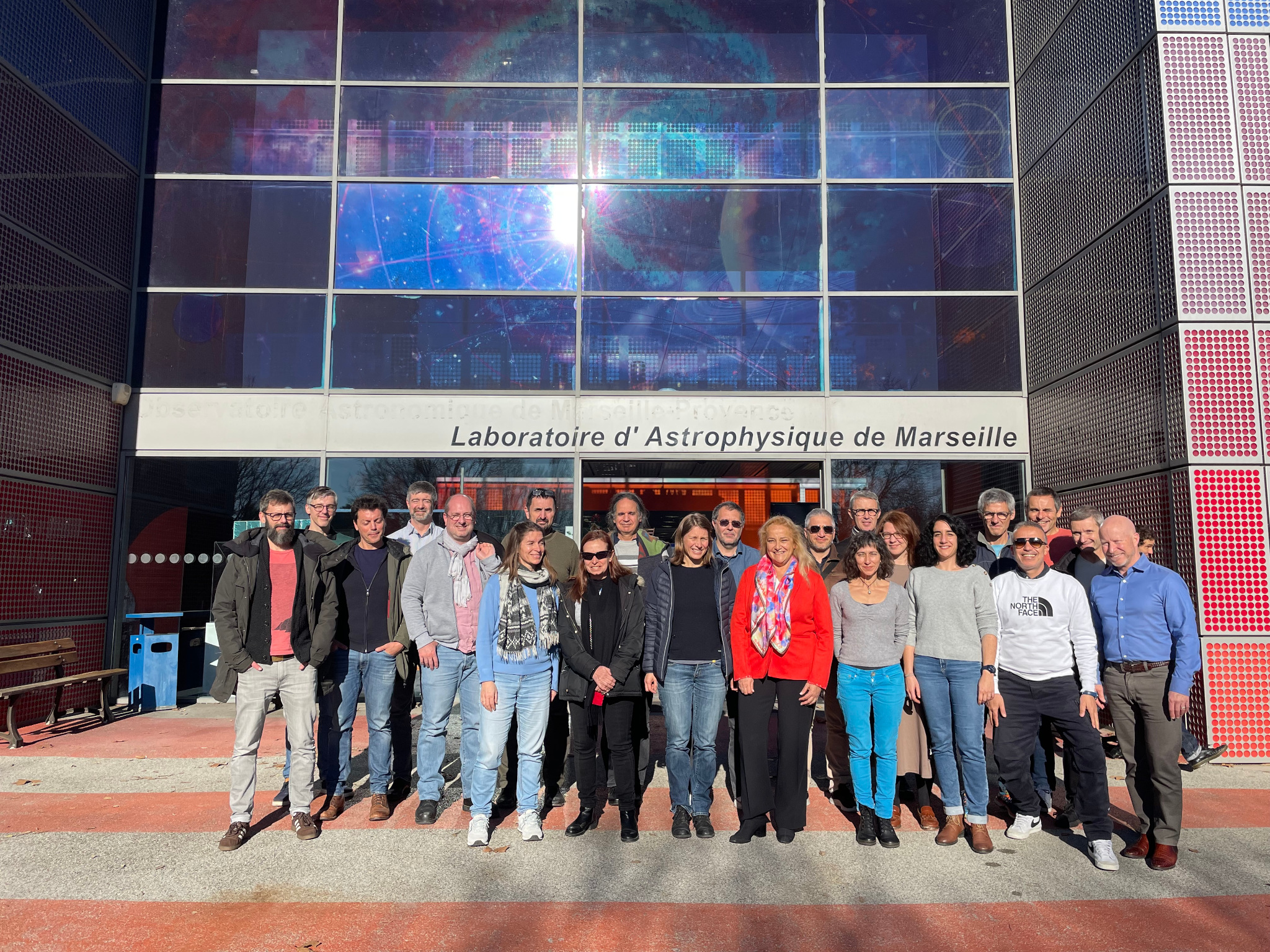
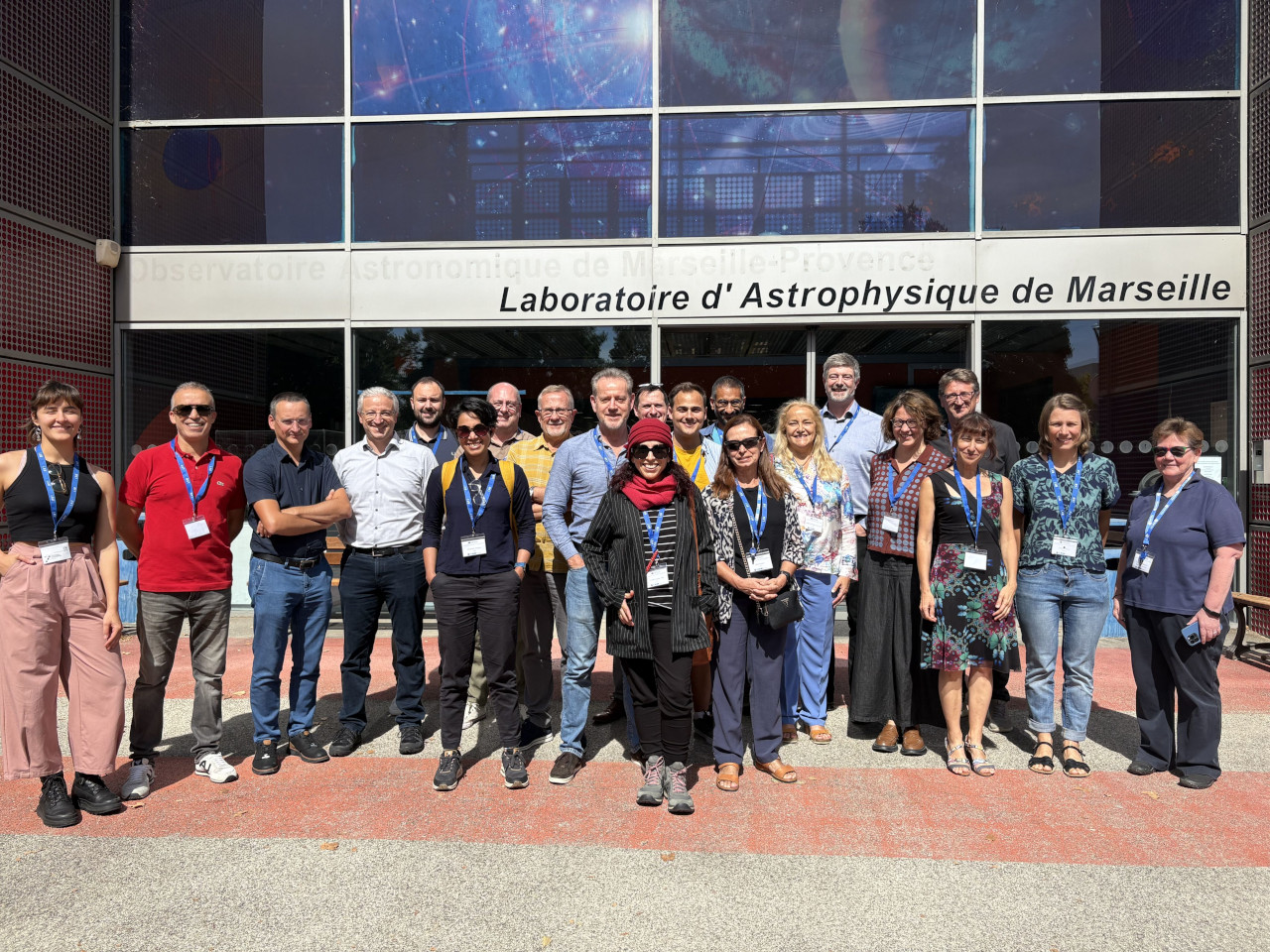
Group of in person participants in front of the LAM (16-18/09/2025) | ||
|
| ||
|
Progress Meeting no. 3 took place at LAM (Marseille) in december 2023 | ||