
-
MOSAIC : THE CONSORTIUM
-
MOSAIC : THE INSTRUMENT
-
MOSAIC : THE SCIENCE
Resolved stellar populations
in and beyond the Local Group
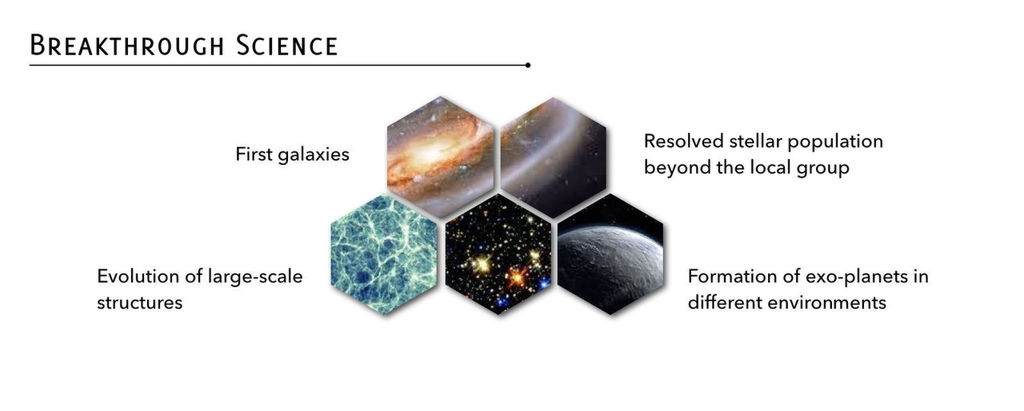
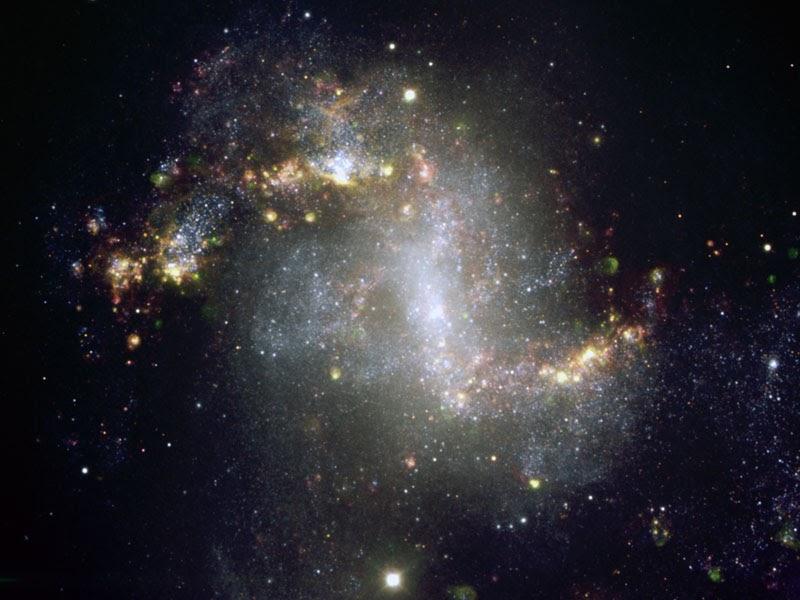 Observations of resolved stellar populations with MOSAIC will enable us to trace and explore the star-formation and chemical-enrichment histories of large samples of galaxies. With current facilities, detailed spectroscopic observations of individual stars are limited to the Milky Way and its nearest neighbours, but reaching beyond the Local Group is essential in order to advance our understanding of how galaxies form and evolve under very different environmental conditions. MOSAIC will allow us, for the first time, to move to a broader range of galaxies in the Local Volume, from the edge of the Local Group out to Mpc distances, and to reach the faintest populations within the Milky Way. Observations of resolved stellar populations with MOSAIC will enable us to trace and explore the star-formation and chemical-enrichment histories of large samples of galaxies. With current facilities, detailed spectroscopic observations of individual stars are limited to the Milky Way and its nearest neighbours, but reaching beyond the Local Group is essential in order to advance our understanding of how galaxies form and evolve under very different environmental conditions. MOSAIC will allow us, for the first time, to move to a broader range of galaxies in the Local Volume, from the edge of the Local Group out to Mpc distances, and to reach the faintest populations within the Milky Way. | ||
Inventory of Matter
|
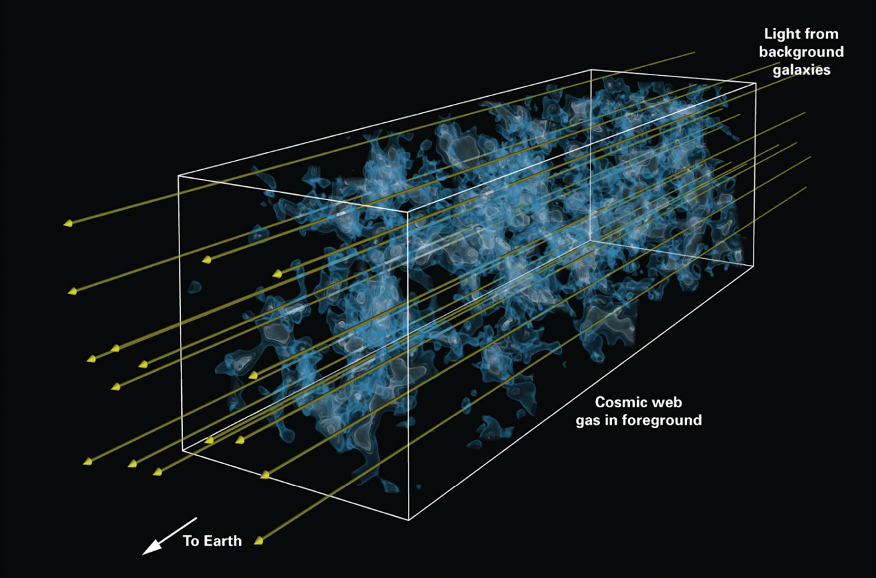
Mosaic will combine both visible and near-IR observations to conduct the first direct inventory of matter in distant galaxies at z~3, including characterising the dark matter profiles in disk galaxies, the distribution of neutral gas in the IGM, and probing all gas phases in the CGM. | ||
Mapping the intergalactic medium
|
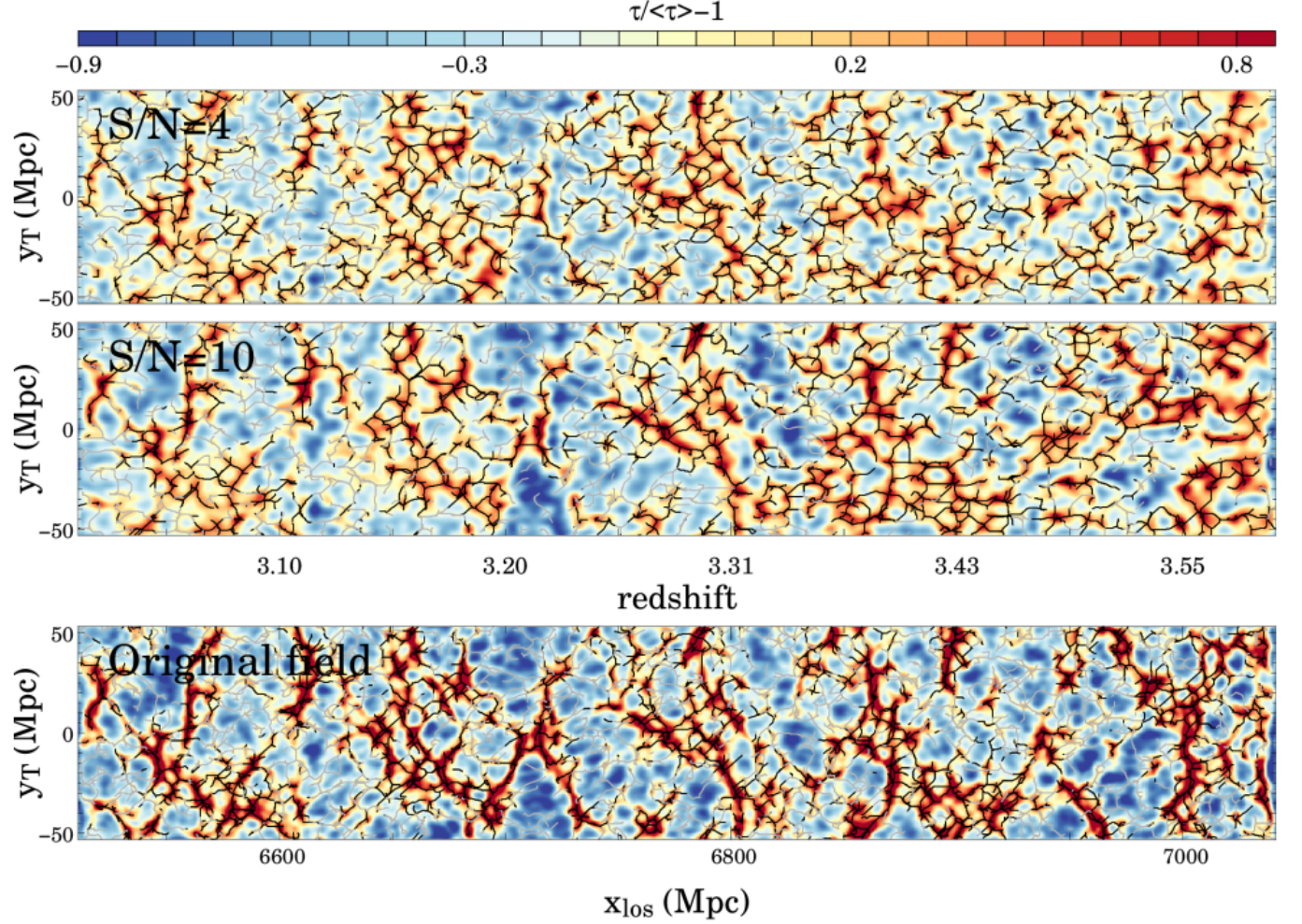
The warm and hot gas between galaxies and within their halo is a reservoir of matter from which proto-galaxies can form. MOSAIC will provide an unprecedented map of the distant 3D structures of this gas as well as evaluating for the first time the distribution of the different baryonic components of the matter. | ||
Detailed simulations show that MOSAIC will play an important role in the mapping of the intergalactic medium. An ambitious galaxy survey with MOSAIC will provide a 3D map of the IGM at z > 3, complementing similar surveys that will focus on lower redshifts. In synergy with the missions like Euclid and JWST, MOSAIC will enable us to probe the full redshift evolution of galaxy growth in the cosmic web throughout the cosmic period of intense star formation.